Research collaboration

Help us find out how well these tests measure

Neuropsych runs 29 cognitive tests in the browser, in English and Spanish. Scores are compared with published norms, but the tests have not yet been checked against established batteries, retested in the same people or studied in clinical groups. We are looking for researchers who want to do that work.

29 tests · 7 areas · 26 in Spanish

Where the tests stand

What exists today, and what does not exist yet.

In place

  • 29 tests across 7 areas, built from published paradigms such as Stroop, Trail Making and Digit Span. 26 of them run in Spanish.
  • 20 tests are scored against published adult norms. The other 9 are shown without norms for now.
  • Scoring follows fixed rules: the same responses always give the same score. The scoring engine page lists the rules and the source of every norm table.
  • The tests run in a web browser, with no install.
Not there yet

  • Test-retest data.
  • Comparison with established batteries in the same people.
  • Studies in clinical groups.
  • Norms of our own. The norms come from published tables for similar, not identical, tests, and the platform has not been normed on large populations.
  • Spanish norms for most tests. Only animal fluency is scored against Spanish norms. The rest use the same tables as English.

Three studies we would like to see

Each one could be run by a single lab, or by a doctoral student with ethics approval and access to participants.

Study 1

Agreement with established batteries

Do the browser versions measure what the lab versions measure?

Design. 80 to 100 adults take Neuropsych and an established battery, such as WAIS‑V subtests, D-KEFS or the Conners CPT-3, in counterbalanced order. Correlate matched subtests.

What it would show. Correlations of about .60 or more on matched subtests would suggest the browser tests measure the same abilities.

Study 2

Test-retest reliability

Do people get similar scores when they take the same tests again?

Design. 50 or more adults take the battery twice, 2 to 4 weeks apart. Intraclass correlations for each test.

What it would show. An ICC of .80 or more is the usual bar before a score is used to follow one person over time.

Study 3

Differences in clinical groups

Do scores differ between adults with a documented ADHD or dyscalculia diagnosis and adults without one?

Design. Three groups of 30 or more adults: ADHD, dyscalculia and no diagnosis. ROC analysis on the relevant tests.

What it would show. An AUC of .80 or more would support using the tests to suggest who might seek a formal assessment.

What we can offer

What is possible today. Tell us what your study needs and we will say plainly whether we can do it.

The battery as it runs

Participants take the tests in their own browser, at no cost. Each test has its own link, so a study can send people straight to the tests it uses.

Your participants’ results

For participants who agree to share them: pseudonymized results as CSV or JSON, one row per test attempt, with scored metrics, trial counts and response-time summaries. We prepare each export by hand.

Scoring you can check

The scoring engine page explains how each score is computed and which published norms it uses.

See the scoring engine

Ethics stays with you

Ethics approval is your institution’s process, at its own pace. For your application, we can describe the tasks, what we store and how we keep it.

Read the privacy policy

Spanish-speaking researchers

We especially want to hear from researchers in Spain and Latin America. 26 of the 29 tests run in Spanish, but only one, animal fluency, is scored against Spanish norms: the tables of the NEURONORMA project (Casals-Coll et al., 2013). The rest use the same published tables as English, so Spanish norms are the largest gap.

The number tasks include dot and digit comparison, number line placement, arithmetic facts, place value and number dictation. If you work on numerical cognition, learning difficulties or adult assessment in Spanish, we would like to talk.

Who we would like to hear from

You do not need to commit to a study. A conversation about method, or a pointer to the right literature, helps too.

University researchers

Psychology, neuropsychology and education faculty with ethics approval routes and participant pools, especially for the agreement and norms studies.

Clinical neuropsychologists

The clinical group study needs adults with a documented ADHD or dyscalculia diagnosis.

School and educational psychologists

The tests are built for adults, and there are no norms for anyone under 18 yet. If you work with teenagers, we would like to hear what a study would need.

Doctoral students

If your thesis needs a browser battery for a validation or norms study, we can explain how each task works and export your participants’ results.

Who runs Neuropsych

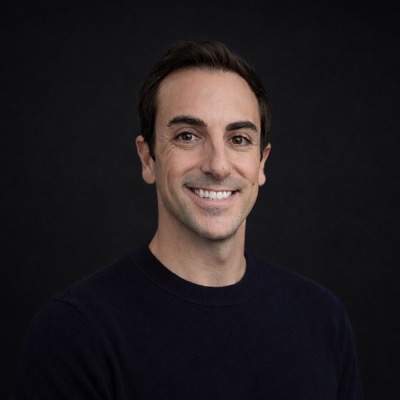
Cristian Dominguez Rein-Loring

Cristian Dominguez Rein-Loring

Creative Technology Lead

I was diagnosed with dyscalculia as an adult, and the experience got me interested in how cognitive assessment actually works. Neuropsych started as a passion project: I wanted to see if I could build a serious, research-grounded battery using modern web technology.

My background is in creative technology, not clinical psychology. The platform works and people are using it, but I want the science behind it to be solid. That’s where you come in.

Get in touch

Tell us a little about your work and how you might want to be involved.

Or email [email protected] directly.

Message received

Thanks for reaching out. We will reply by email.